Young Helpers Collect Trash and Create Art in Leverkusen
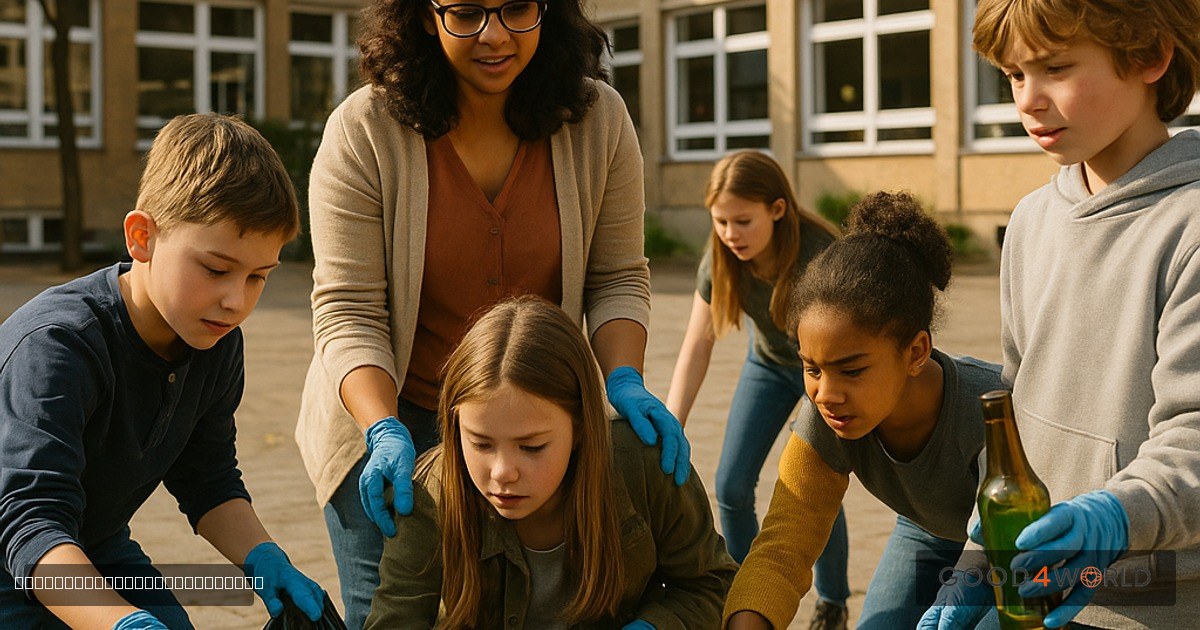
Students from Theodor‑Heuss‑School in Leverkusen collected litter around their school as part of the “Wir für unsere Stadt” campaign and turned it into collages for a class exhibition.
Around Theodor‑Heuss‑Realschule in Opladen, fifth graders equipped with gloves took to the streets as part of the “Wir für unsere Stadt” campaign, collecting discarded litter—ranging from packaging and glass bottles to cigarette butts—as reported by eleven‑year‑old Sarohi and ten‑year‑old Leo. They described the activity as “kind of cool” since the gloves kept them clean (source: Kölner Stadt‑Anzeiger).
The project was embedded in cross‑curricular environmental education: teacher Anjela Dhingra explained that the issue of litter was addressed not only in biology but also in practical philosophy and geography, helping students understand how pollution starts right at their doorstep (source: Kölner Stadt‑Anzeiger).
The students then took a creative turn by transforming the collected items into collages displayed in their classroom. To support the artwork, they even went out again to intentionally gather suitable materials (source: Kölner Stadt‑Anzeiger).
The school’s effort was part of a larger citywide cleanup involving 53 schools and day‑care centers with approximately 6,000 children and young people participating (source: NaturGut Ophoven). From Monday through Thursday, they collected litter, and on Friday, AVEA arranged the pick‑up and scaling of the collected material (sources: Kölner Stadt‑Anzeiger, NaturGut Ophoven).
This local effort forms part of the annual “Wir für unsere Stadt” campaign, organized by the city of Leverkusen together with AVEA, Job Service Leverkusen, and NaturGut Ophoven (sources: Kölner Stadt‑Anzeiger, Leverkusen Sustainability Report 2025).
What Works
- The students actively collected litter around their school, wearing gloves for safety and hands‑on engagement. The collected waste was then addressed across subjects in class and creatively transformed into collages, which they displayed.
Why This Matters
- The activity fostered environmental awareness among children locally, illustrating that waste prevention begins with individuals. It was also part of a larger city‑wide initiative involving about 6,000 young people from 53 institutions (source: NaturGut Ophoven), highlighting its broad reach.
Key Lessons
- Environmental education and creativity can go hand in hand: when schools link cleanup efforts with artistic follow‑up, it amplifies children's engagement and awareness in concrete ways—beyond the theoretical.
Limitations & Challenges
- No relevant limitations apparent from the source.
Original Sources
Why this story is on GOOD4WORLD
This story was selected according to GOOD4WORLD standards for constructive journalism: verified impact, systemic solution focus, and high credibility.