Students from Baiersbronn Realschule Revive Traditional Orchards in the Black Forest
Students from Baiersbronn Realschule take action to care for neglected traditional orchards in the Black Forest, restoring them through tending and harvest.
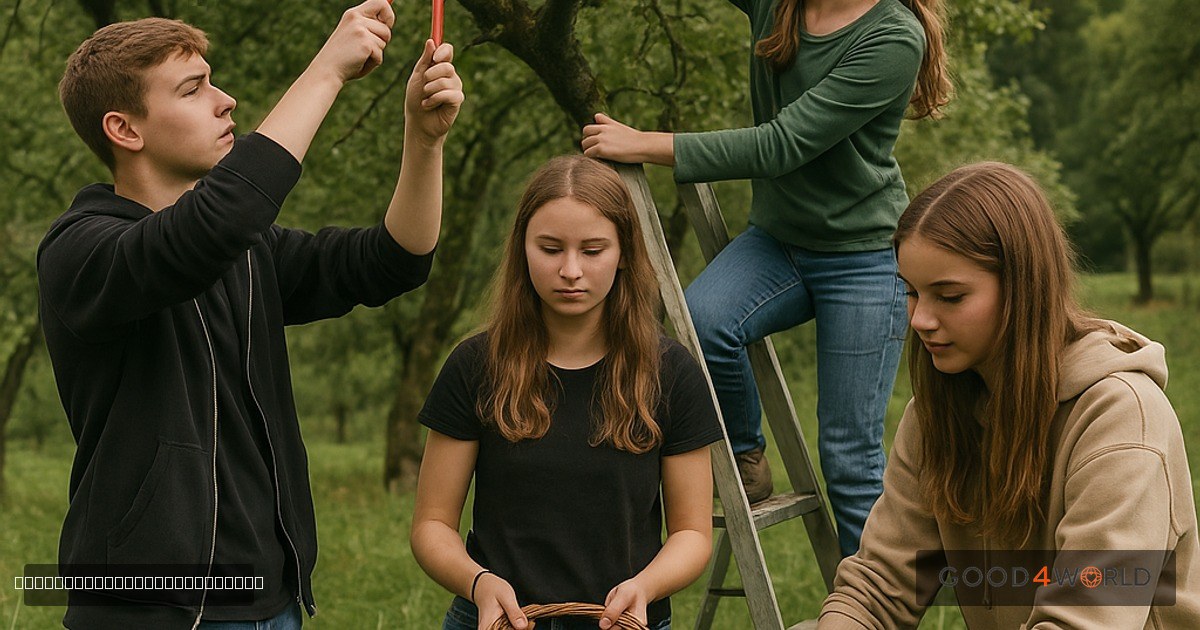
In Baiersbronn, nestled in the Black Forest, a group of students from the local Realschule took the initiative to revive neglected traditional orchards. They cared for the old fruit trees, managed the overgrowth, and harvested the produce—demonstrating hands-on commitment to preserving the region’s cultural landscape.
The idea originated within a school setting that values nature and regional heritage. Without external prompts, the students took responsibility for the trees and environment on their doorstep—with a shared goal of creating something positive.
Their actions were practical and visible: students cleared the orchards, pruned branches, removed invasive vegetation, and collected ripe fruit. Their work was tangible—a direct contribution to environmental care and sustainability.
Concrete results such as amounts harvested or lasting maintenance successes are not specified in the source. There is no information on whether the fruits were further processed or used within the school.
Also not provided are details about the number of students involved, the frequency of their work, or whether teachers or local partners supported the effort. The source highlights primarily the symbolic and motivational value: young people acting on their own initiative, drawing attention back to neglected landscapes.
What Works
- The students tended neglected orchards, pruning trees, removing overgrowth, and harvesting fruit. The initiative emerged independently within the school and was implemented through hands-on effort.
Why This Matters
- The activity highlights how young people experience environmental education through direct action. They rescued traditional orchards—a valuable cultural landscape—and displayed local commitment. Concrete harvest quantities or long-term outcomes are not specified.
Key Lessons
- The story shows: when students are given meaningful, hands-on access to nature, they take responsibility and take action. Quietly revitalizing a landscape can be as impactful as large-scale initiatives.
Limitations & Challenges
- Not specified: the scope of the effort, number of participants, frequency of work, fruit processing, longer-term impact. No relevant limitations apparent from the source.
Original Sources
Why this story is on GOOD4WORLD
This story was selected according to GOOD4WORLD standards for constructive journalism: verified impact, systemic solution focus, and high credibility.